
How to Teach Young Children About Gratitude and Appreciating What They Have
Gratitude is a powerful value that helps children develop happiness, empathy, and emotional balance. When kids learn to appreciate what they have—whether it’s a toy, a sunny day, or a friend—they’re more likely to feel joy, form strong relationships, and navigate challenges with resilience. Teaching gratitude doesn’t require lectures; it grows through simple daily moments and modeling from the adults around them.
Why Gratitude Matters for Children
- Fosters a positive mindset and reduces entitlement
- Strengthens relationships with family and friends
- Encourages mindfulness and emotional regulation
- Promotes kindness and generosity
- Builds resilience in tough times
1. Explain Gratitude in Child-Friendly Language
Start with feelings they already know.
Activity Idea:
- Say: “Gratitude means saying thank you and noticing the things that make us feel happy.”
- Give examples: “Like when someone helps you, or when you get to play outside.”
- Ask: “What made you smile today?”
What Kids Learn:
- That gratitude is about noticing and appreciating.
- How to connect emotions with experiences.
- A simple way to express thanks.
2. Create a Daily Gratitude Ritual
Repetition helps form habits.
Activity Idea:
- During bedtime, ask: “What’s one thing you’re thankful for today?”
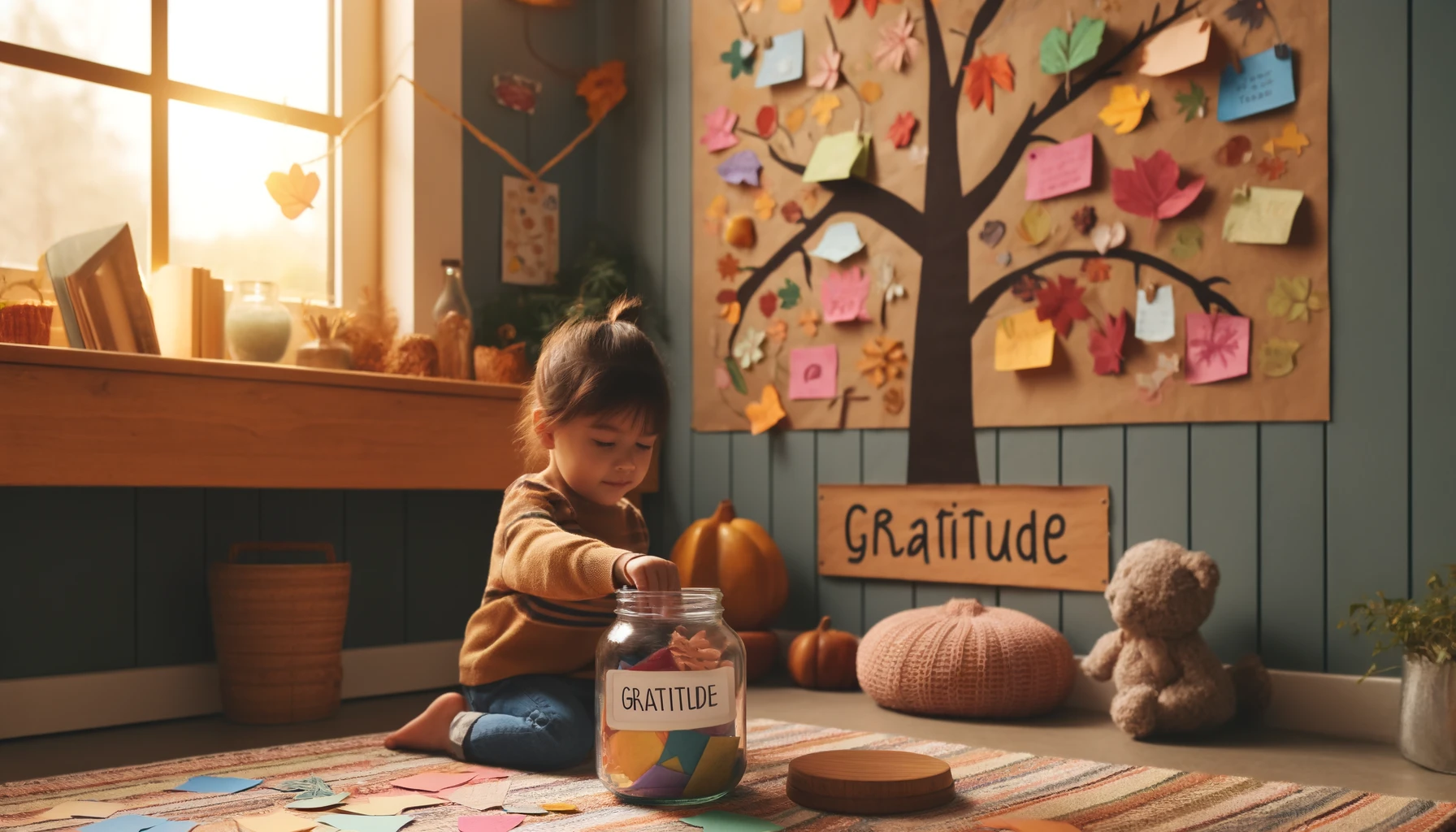
- Keep a “Gratitude Jar” with notes or pictures your child can add to each day.
- Make a habit of saying “thank you” out loud for little things during the day.
What Kids Learn:
- How to reflect on their day with positivity.
- That even small things are worth appreciating.
- That grateful thinking is a daily practice.
3. Read Books That Inspire Thankfulness
Books help children understand feelings through story.
Activity Idea:
- Read titles like Thankful by Eileen Spinelli or Bear Says Thanks by Karma Wilson.
- Ask: “What was the character thankful for?”
- Let your child draw their own version of the story, adding things they’re thankful for.
What Kids Learn:
- That everyone has something to appreciate.
- How to recognize acts of kindness.
- That thankfulness is part of emotional growth.
4. Encourage Thankful Behavior, Not Just Words
Gratitude is a feeling—but it also lives in actions.
Activity Idea:
- Have your child draw a thank-you picture for a friend or helper.
- Help them say thank you after playdates, gifts, or meals.
- Acknowledge when they notice others’ efforts: “You said thank you without being asked—how thoughtful!”
What Kids Learn:
- That gratitude can be shown through kindness.
- That their appreciation matters.
- How to express thanks meaningfully.
5. Model Gratitude Every Day
Children learn by watching the adults in their lives.
Activity Idea:
- Say: “I’m thankful we have time together today,” or “Thank you for helping me clean up.”
- Express thanks to others where your child can see and hear it.
- Reflect on your own blessings aloud, no matter how small.
What Kids Learn:
- That gratitude is a natural part of daily life.
- How adults express emotions and appreciation.
- How to notice what’s good around them.
6. Connect Gratitude to Challenges
Even tough days can have silver linings.
Activity Idea:
- After a hard moment, ask: “What’s one thing that still made today okay?”
- Talk about how friends or family help us feel better when we’re sad.
- Use a “Gratitude Rainbow” drawing to reflect on both good and hard feelings.
What Kids Learn:
- That gratitude isn’t only for perfect days.
- How to find light in dark moments.
- Emotional resilience through appreciation.
7. Celebrate Giving and Helping
Giving promotes gratitude on both sides.
Activity Idea:
- Let your child help donate toys or clothes they’ve outgrown.
- Say: “We’re giving this so someone else can enjoy it too.”
- Afterward, ask: “How does it feel to help someone else?”
What Kids Learn:
- That they have something valuable to offer.
- That generosity feels good.
- How gratitude grows from sharing.
8. Make Gratitude Visual and Fun
Seeing gratitude makes it more real for kids.
Activity Idea:
- Create a Gratitude Tree with leaves for each thing your child is thankful for.
- Use stickers or drawings to decorate a “thankful chart.”
- Make a scrapbook of “happy moments” to review together.
What Kids Learn:
- That gratitude can be creative and expressive.
- How to reflect visually on joyful things.
- That their thoughts and feelings are worth displaying.
Final Thoughts
Teaching gratitude to young children doesn’t require big gestures—it lives in everyday moments. By talking about appreciation, modeling it ourselves, and making it part of daily life, we help kids grow into joyful, compassionate people. When children learn to say “thank you” with their hearts and actions, they carry that thankfulness with them for life.